
$25 Off $200+ Order with Code SAVE25
- HOME STYLE ▾
- PERSONAL STYLE ▾
- DESK & OFFICE ▾
- CREATIVE TOYS & KITS
- SALES & SPECIALS ▾
- NEWS / BLOG
$25 Off $200+ Order with Code SAVE25
Item# WB4834
$126.00 $91.95
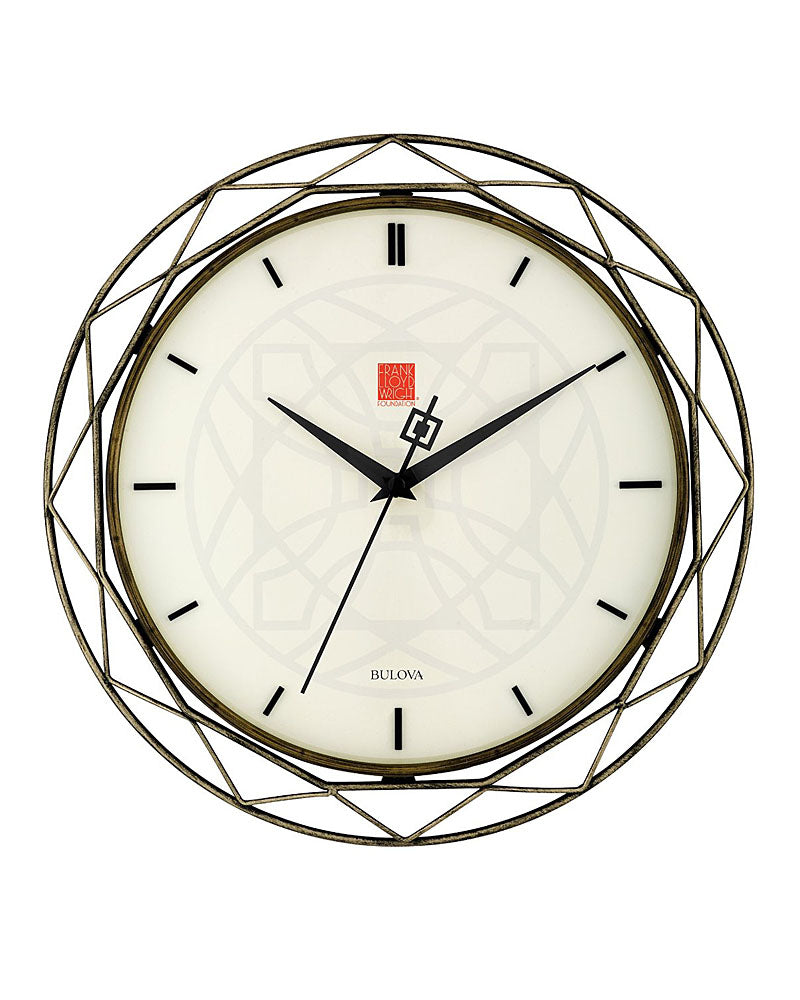
The Frank Lloyd Wright Luxfer Prism Wall Clock is based on his designed and patented series of forty-five prisms in clear glass tiles for the Luxfer Prism Company. Wright designed The Luxfer Prisms Office Building in Buffalo, New York, 1896-97, with the front and rear walls of the building made entirely of Luxfer Prism tiles. This clock incorporates two of the Luxfer Prism designs, including the flower design that was the only one that was ever actually produced. This clock includes a metal case in a bronze finish, raised hour markers on the dial, a protective convex glass lens and a quiet sweep second hand. Diameter: 14” Depth: 1.75”. From the Frank Lloyd Wright Collection by Bulova.
$209.95 $230.00
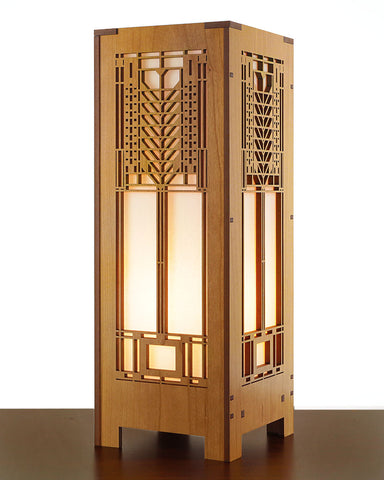
The Frank Lloyd Wright Martin House Tree of Life Lightbox Accent Lamp design is adapted from one of the series of "Tree of Life" windows in the Darwin D. Martin House. Cherry veneered MDF with heat resistant shoji paper shade material. Inline switch on a 8' cord with a 4.5 watt LED tubular bulb. Ht: 15.5". W: 5.75". D: 5.75"....
$209.95 $230.00
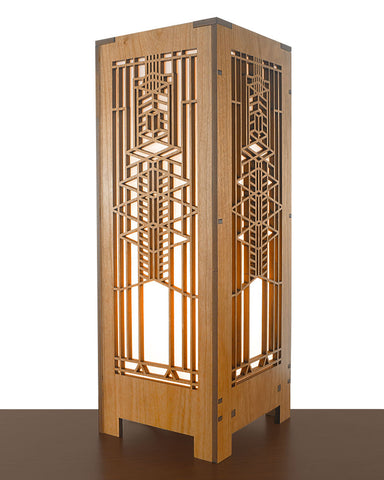
The Frank Lloyd Wright Robie Art Glass Lightbox Accent Lamp design is adapted from one of the art glass windows in the Frederick C. Robie House (1908). Cherry veneered MDF with heat resistant shoji paper shade material. Inline switch on a 8' cord with a 4.5 watt LED tubular bulb. Ht: 15.5". W: 5.75". D: 5.75". 120 volt. This Frank...
$132.95 $140.00
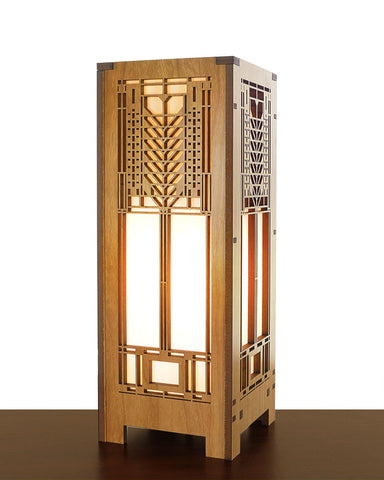
The Frank Lloyd Wright Martin House Tree of Life Mini Lightbox Accent Lamp design is adapted from one of the series of "Tree of Life" windows in the Darwin D. Martin House. Cherry veneered MDF with heat resistant shoji paper shade material. Inline switch on a 8' cord with a 4.5 watt LED tubular bulb. Ht: 11.5". W: 4.25". D:...
$132.95 $140.00
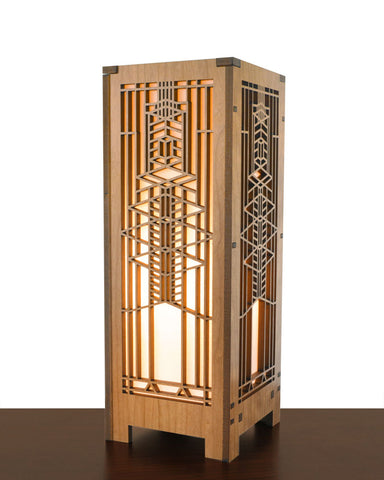
The Frank Lloyd Wright Robie Art Glass Mini Lightbox Accent Lamp design is ideal for someone looking for a smaller accent lamp. Adapted from one of the art glass windows in the Frederick C. Robie House (1908). Cherry veneered MDF with heat resistant shoji paper shade material. Inline switch on a 8' cord with a 4 watt LED tubular bulb....
Sign up to get the latest on sales, coupons & new releases
© 2026 ArchitectGiftsPlus. All rights reserved.
Maclin Studio, Inc. 219 N. Milwaukee Street
Milwaukee, WI 53202. Ph: 414.276.4750


