
$25 Off $200+ Order with Code SAVE25
- HOME STYLE ▾
- PERSONAL STYLE ▾
- DESK & OFFICE ▾
- CREATIVE TOYS & KITS
- SALES & SPECIALS ▾
- NEWS / BLOG
$25 Off $200+ Order with Code SAVE25


Item# MM80-013623
$78.00 $69.95
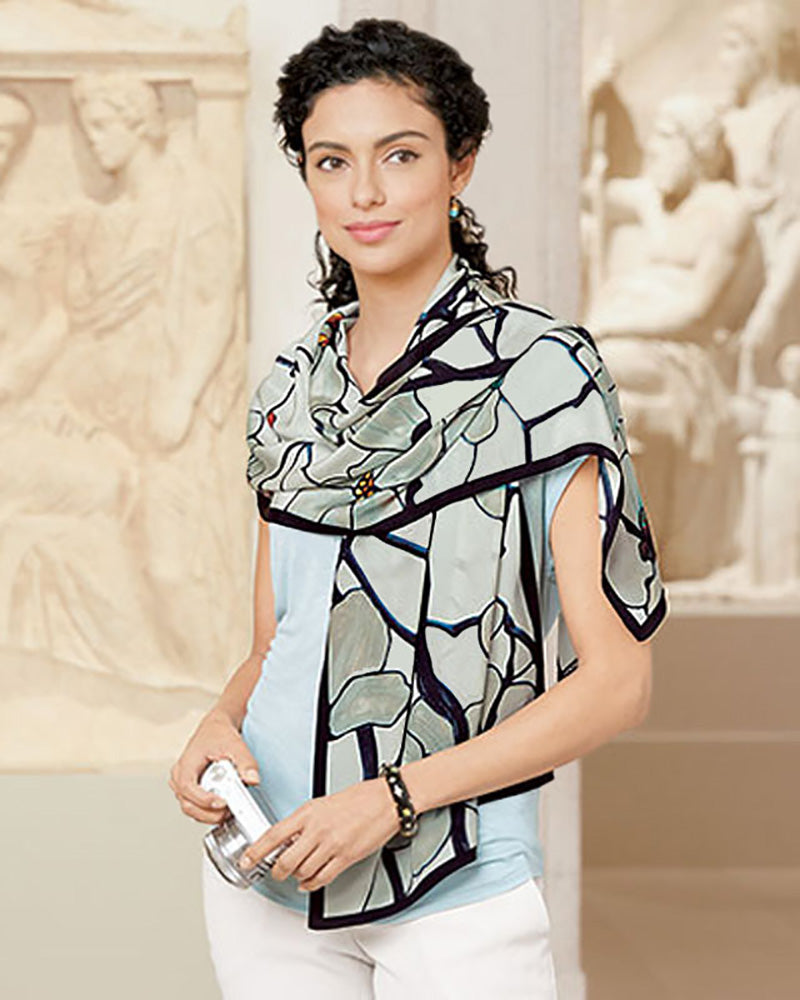
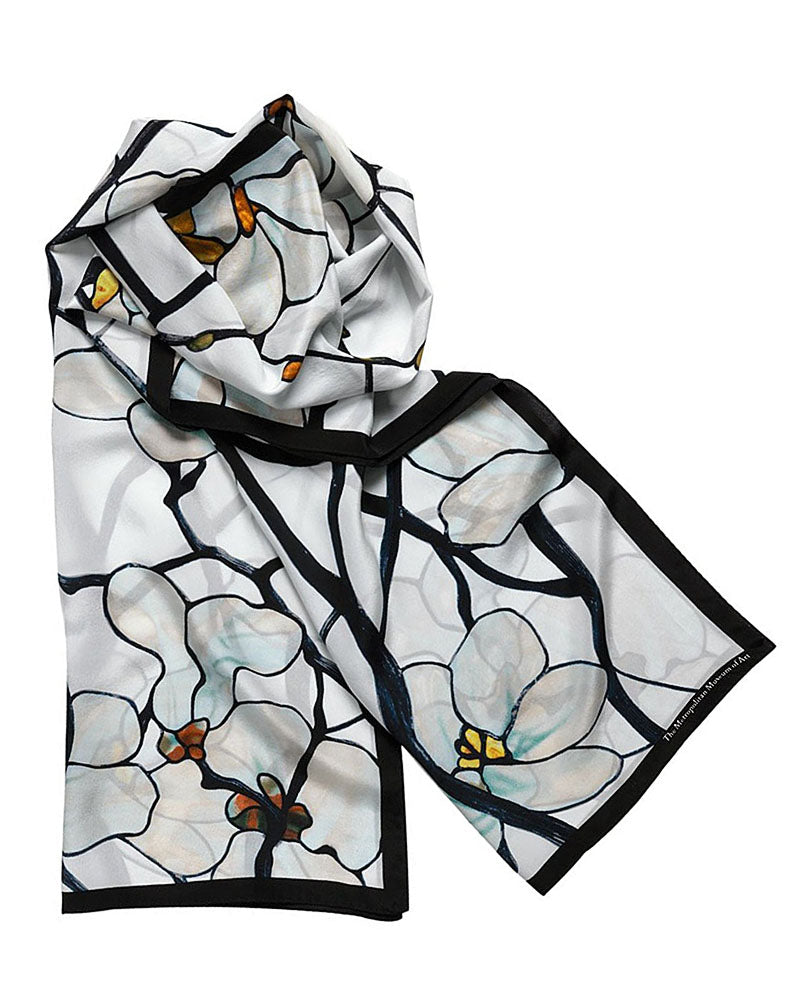
Louis Comfort Tiffany (American, 1848 - 1933) was one of America's most noted decorative artists at the turn of the twentieth century. He designed the brilliant five paneled Magnolia window (ca. 1885) for the Tiffany mansion at 72nd Street and Madison Avenue in New York where it was placed in the grand library. Divided by heavy leading, the window includes sections composed of graceful blossoming branches with pearly leaves and yellow and silver-gray leaf buds primed to open. This elegant lightweight scarf features a detail adapted from this stunning window. 100% Silk crepe de chine. 72”L x 18”W.
Produced by The Metropolitan Museum of Art in cooperation with The Charles Hosmer Morse Museum of American Art, Winter Park, Florida.

$48.95 $60.00
The Frank Lloyd Wright Waterlilies doormat, depicting flowers and lily pads floating in a tranquil pool, has a design adapted from an unrealized leaded stained glass window designed by Wright circa 1893-95. In this early design, the organic forms and repeating motifs display Wright’s commitment to the integration of nature translated into geometric form manifested in his architectural work. Constructed...

$48.95 $60.00
The Frank Lloyd Wright Saguaro Forms doormat features a design adapted from Saguaro Forms and Cactus Flowers, created by Frank Lloyd Wright in 1927 as part of his Liberty magazine cover studies. Originally considered too avant-garde, the design reflects Wright's mastery of abstraction, geometry, and asymmetry inspired by the desert landscape. Now one of his most celebrated works, it continues...

$48.95 $60.00
The Frank Lloyd Wright Coonley Playhouse Doormat features a design adapted from the Coonley Playhouse art glass windows created by Frank Lloyd Wright for Avery and Queen Coonley in 1912. Each one of window designs is a unique and joyful abstract representation of elements seen in a parade: flags, confetti, and balloons. Constructed in 100% natural coir with PVC backing,...

$67.95 $75.00
The Frank Lloyd Wright Waterlilies doormat, depicting flowers and lily pads floating in a tranquil pool, has a design adapted from an unrealized leaded stained glass window designed by Wright circa 1893-95. In this early design, the organic forms and repeating motifs display Wright’s commitment to the integration of nature translated into geometric form manifested in his architectural work. Constructed...
Sign up to get the latest on sales, coupons & new releases
© 2026 ArchitectGiftsPlus. All rights reserved.
Maclin Studio, Inc. 219 N. Milwaukee Street
Milwaukee, WI 53202. Ph: 414.276.4750


