
$25 Off $200+ Order with Code SAVE25
- HOME STYLE ▾
- PERSONAL STYLE ▾
- DESK & OFFICE ▾
- CREATIVE TOYS & KITS
- SALES & SPECIALS ▾
- NEWS / BLOG
$25 Off $200+ Order with Code SAVE25


Item# WCS21-01467
$32.00 $28.95
The Frank Lloyd Wright Waterlilies Glass Cutting Board, depicting flowers and lily pads floating in a tranquil pool, has a design adapted from an unrealized leaded stained glass window designed by Wright circa 1893-95. Manufactured with durable 3mm tempered glass, the cutting board can be used for dicing foods and as a charcuterie board for serving. The surface of the cutting board is slightly textured to help keep foods stable as they are being chopped. Rubber feet on the bottom of the board also help protect your surfaces from scratches and keep the board in place. Dimensions: 15" x 12" x 0.125".
$74.95 $78.00
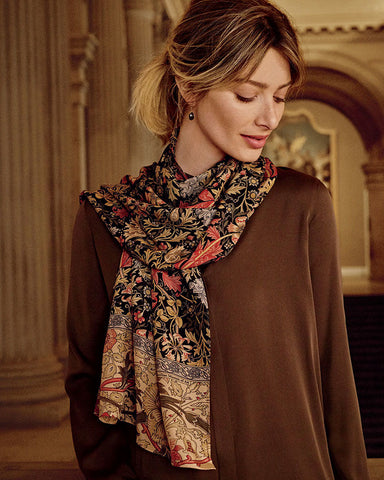
The Metropolitan Museum’s elegant scarf is inspired by the John Henry Dearle (British, 1860-1932) 1896 wallpaper design titled “Compton”. John Henry Dearle was a British textile and stained-glass designer who was a chief designer of the William Morris interior design firm Morris & Co. The scarf features different shades of green, pink, and pastel blues that evokes the botanical and...

$70.95 $78.00
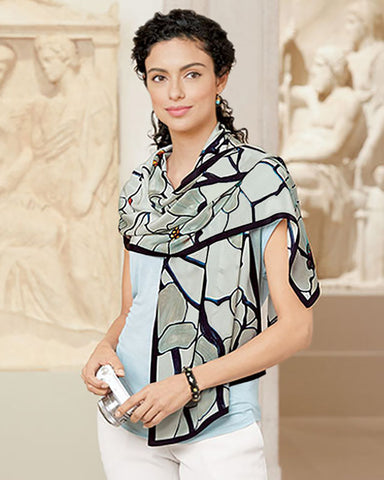
Featuring lush, radiant colors, the scarf is based on the Louis Comfort Tiffany (American, 1848 - 1933) Magnolias and Irises Favrile glass window depicting a picturesque landscape. The window features an embankment of irises beneath flowering magnolia trees. Magnificent purple hills with a central meandering stream, emblematic of the River of Life theme, are set in the background. 100% Silk...
$69.95 $78.00
Louis Comfort Tiffany (American, 1848 - 1933) was one of America's most noted decorative artists at the turn of the twentieth century. He designed the brilliant five paneled Magnolia window (ca. 1885) for the Tiffany mansion at 72nd Street and Madison Avenue in New York where it was placed in the grand library. Divided by heavy leading, the window includes...
$87.95 $96.00
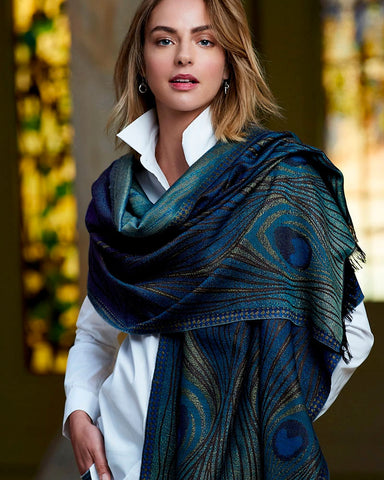
The shimmering design of the Metropolitan Museum Tiffany Peacock Feather Shawl was inspired by the Louis Comfort Tiffany (American, 1848–1933) iridescent glass vase produced by Tiffany Glass and Decorating Company in 1900. The piece stylizes the "eye" of the peacock feather with rich iridescent hues gradating to a light blue surrounding the eyes. Louis Comfort Tiffany was often compelled by the...
Sign up to get the latest on sales, coupons & new releases
© 2026 ArchitectGiftsPlus. All rights reserved.
Maclin Studio, Inc. 219 N. Milwaukee Street
Milwaukee, WI 53202. Ph: 414.276.4750


