
$25 Off $200+ Order with Code SAVE25
- HOME STYLE ▾
- PERSONAL STYLE ▾
- DESK & OFFICE ▾
- CREATIVE TOYS & KITS
- SALES & SPECIALS ▾
- NEWS / BLOG
$25 Off $200+ Order with Code SAVE25


Item# SUWCSWAN
$74.00 $56.95
This Walter Crane Swan Tapestry Pillow design is inspired by Walter Crane's (1845-1915) painting Swan, Rush and Iris. Originally a wallpaper design in the Arts and Crafts style, it depicts two swans facing each other, profiled in perfect symmetry. A decorative pillowcase that is sure to liven up any room in the house, and makes the perfect scatter cushion for a modern finish in any home. The tapestry woven design is on both sides of the pillow, and includes insert. Each pillow measures 17" x 17". Care instructions: Dry clean only. Please note: this item does not qualify for expedited shipping or gift wrap.
Gift wrap not available.
Expedited shipment not available.
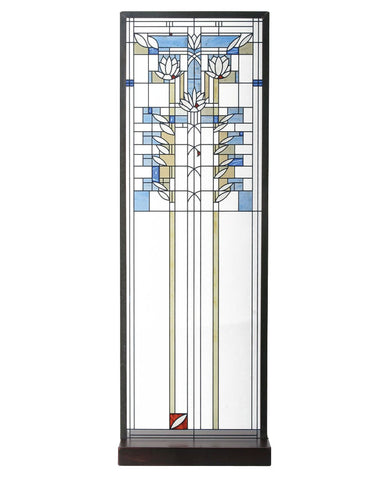
$74.95 $120.00
This Frank Lloyd Wright Waterlilies Stained Glass, depicting flowers and lily pads floating in a tranquil pool, is adapted from an unrealized leaded stained glass window designed by Wright circa 1893-95. On this glass panel, enamel colors are individually applied to a single sheet of glass which is then kiln fired to permanently fuse the enamels to the glass. The...
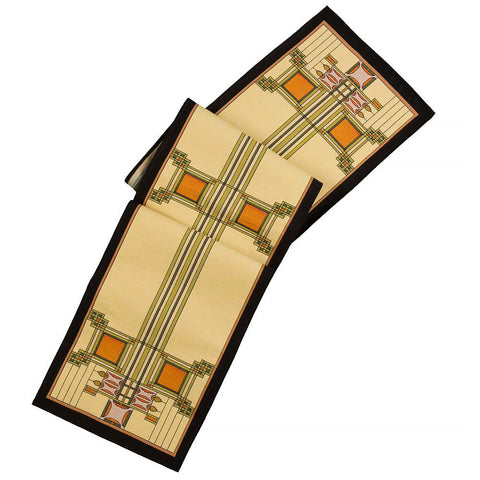
$79.95 $86.00
The design of this Sullivan Table Runner is based on a window in the National Farmer's Bank, Owatonna, Minnesota, 1908, designed by Louis Henry Sullivan, with decorative elements by George Elmslie. It was the first of Sullivan's "jewel box" bank designs. A design from an important historic architectural building, brought to life for today’s modern homes with extraordinary weaving and...
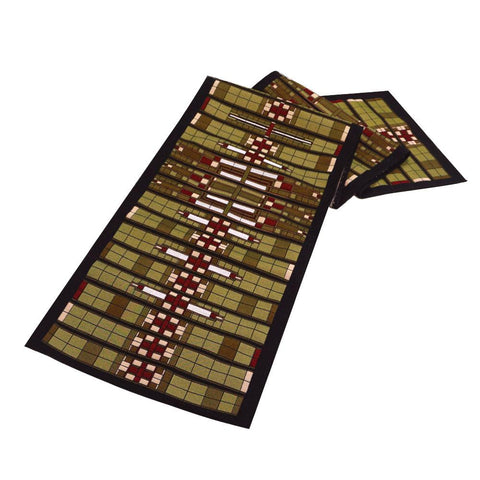
$79.95 $86.00
The Louis Sullivan Skylight Tapestry Table Runner is inspired by a window designed by Louis Henry Sullivan. The window is from a branch of the Farmers Merchant & Union Bank, 1919. For a young Frank Lloyd Wright, his years working under Louis Sullivan, February of 1888 to June of 1893, undoubtedly shaped his design philosophy. Wright, who rarely acknowledged any direct influences called Sullivan his “Lieber...

$69.95 $86.00
The design of this Prairie Chevron Tapestry Table Runner is inspired by Prairie style stained glass windows made popular in the works of Frank Lloyd Wright. A design from an important historic architectural building, brought to life for today’s modern homes with extraordinary weaving and depth of color, woven on jacquard looms here in the USA. Each woven tapestry table...
Sign up to get the latest on sales, coupons & new releases
© 2026 ArchitectGiftsPlus. All rights reserved.
Maclin Studio, Inc. 219 N. Milwaukee Street
Milwaukee, WI 53202. Ph: 414.276.4750


